
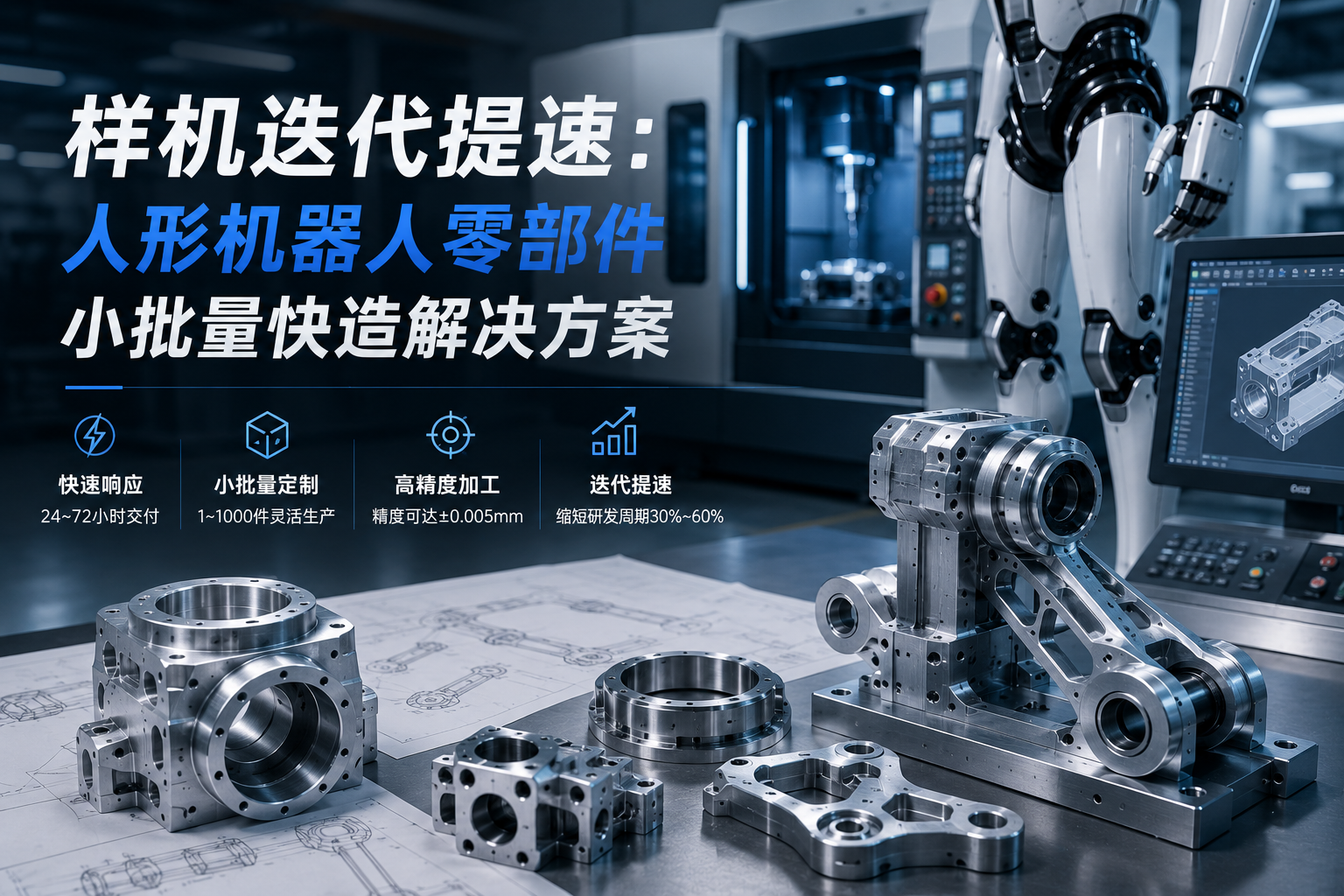
In the R&D of humanoid robots, the speed of prototype iteration often determines project progress and core competitiveness.
“ Prototype Iteration Acceleration: Low-Volume Rapid Manufacturing Solution for Humanoid Robot Components — another important milestone on our smart manufacturing journey. ”
In the R&D of humanoid robots, the speed of prototype iteration often determines project progress and competitiveness.
However, practical challenges remain:
Frequent structural revisions
A wide variety of parts
Long sampling lead times
These issues greatly slow down the overall R&D pace due to manufacturing limitations.
I. Core Values of Low-Volume Rapid Manufacturing
Compared with traditional processing methods, low-volume rapid manufacturing features:
- Quick response (sampling completed within 24 to 72 hours)
- Parallel processing for diverse parts
- Flexible process switching
II. Key Implementation Methods
- Rapid CNC Machining
- Ideal for structural parts and high-precision components.
- 3D Printing for Auxiliary Verification
- Applied to early structural validation and assembly tests.
- Combined Process Strategy
- The integration of 3D printing and CNC machining drastically cuts the validation cycle.
III. Practical Results
The rapid manufacturing model shortens prototype iteration cycles by 30% to 60% on average and greatly boosts R&D efficiency.
For humanoid robot enterprises, manufacturing capability has become an integral part of R&D strength.
With multi-process collaboration in low-volume production, KuaiZao Workshop delivers strong support for faster prototype iteration.